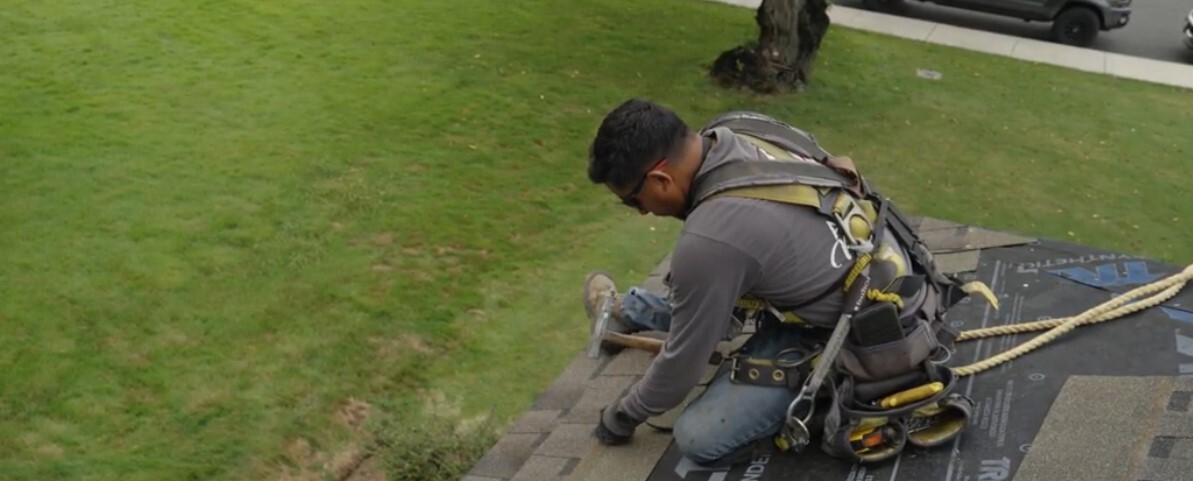
When it comes to asphalt shingles, precision during installation is directly related to system performance. One of the most critical parts of shingle installation is the nailing pattern. The placement of the nail, the number of nails used, and the method of driving those nails all play a direct role in wind resistance, water shedding, and long-term roof performance.
At PABCO Roofing Products, our nailing patterns are engineered, tested, and installation standards designed to ensure shingles perform to their rated wind resistance, shed water properly, and remain eligible for warranty coverage.
Nailing Patterns: Built-In Guidance for Proper Installation
Every asphalt shingle is tested using a specific nailing pattern. That pattern includes quantity, placement, spacing, fastener type, and penetration depth. When a shingle is installed according to the manufacturer’s published instructions, it performs exactly as tested. When installers deviate, nailing too high, too low or outside the recommended zone, the shingle is no longer installed under tested conditions.
The nail line marks the area where the shingle is engineered to be fastened, typically near the laminated portion of the shingle, where holding power is maximized.
- Nailing fasteners above the reinforced area reduces wind resistance and increases the potential for water ponding.
- Low nailing can expose nail heads, interfere with sealing, and lead to visible nails from the ground.
- Missed zones can compromise uplift resistance and can void warranty coverage.
Nail placement, drive, and wind ratings
As storm intensity increases nationwide, the importance of accurate installation has become more crucial than ever. Wind uplift ratings are only valid when shingles are installed exactly as tested. For example, PABCO shingles offer wind ratings between 110 miles per hour and 130 miles per hour, depending on the product and whether proper installation methods were adhered to.
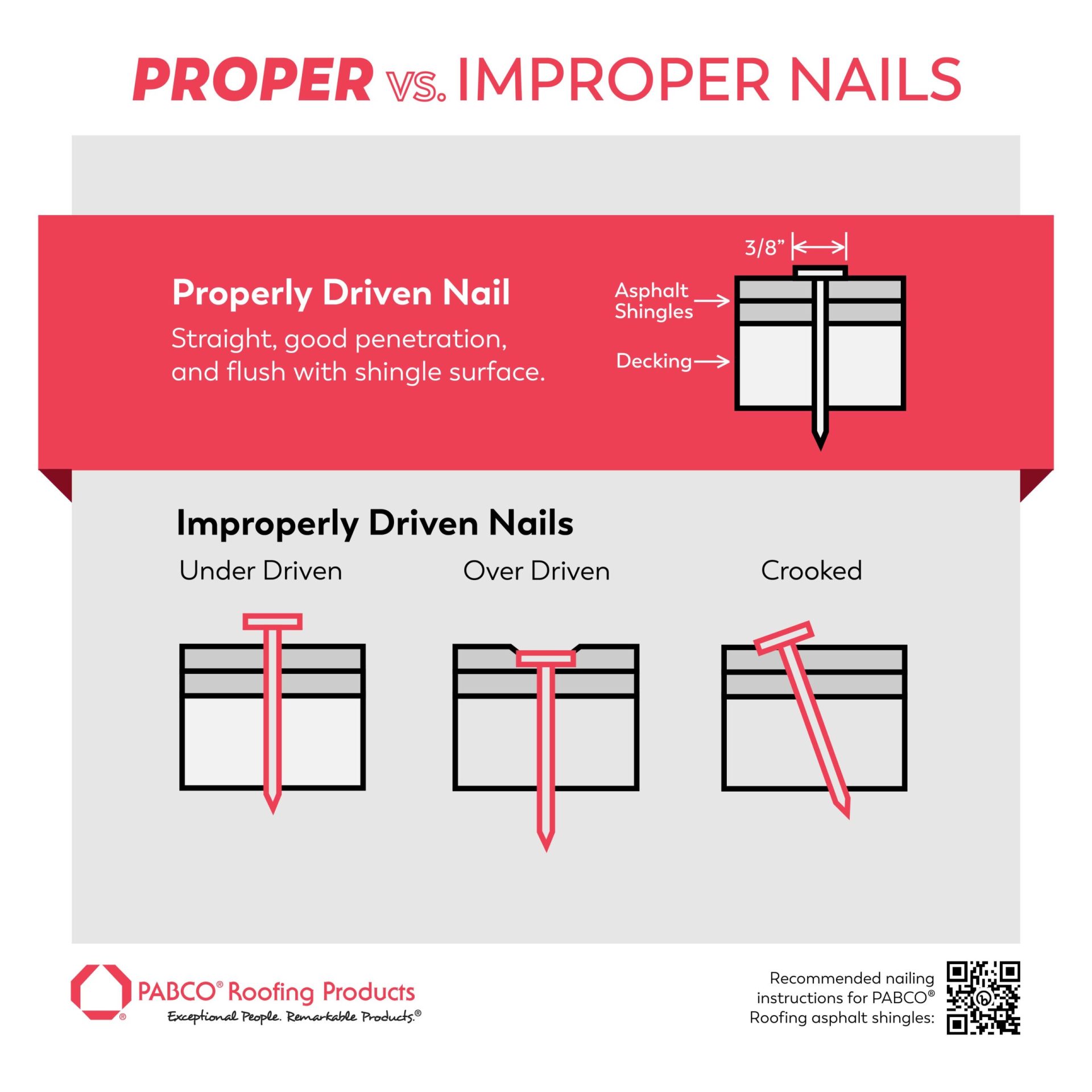
Even when nails are placed correctly, how they’re driven also matters.
- Angled nails can damage both the shingle being fastened and the shingle above it
- Overdriven nails cut into the shingle, reducing holding power
- Underdriven nails interfere with sealing and can lead to uplift
PABCO installation requirements also specify the fastener itself, including:
- Galvanized roofing nails
- Minimum head diameter and proper gauge
- Minimum length
- Penetration of at least ¾ inch into the roof deck
These requirements ensure the fastener lasts for the life of the shingle. Non-galvanized or undersized nails can corrode, stain the roof, lose holding power, or fail prematurely even when placement is otherwise correct.
Manufacturer instructions protect performance
Nailing patterns are both a performance condition and a warranty condition. PABCO Roofing Products can confidently stand behind our products because they’re tested under defined installation parameters. Best practices are straightforward:
- Follow the published nailing pattern
- Use the correct number of nails
- Place the nails within the specified zone
- Drive nails straight and flush
- Use fasteners that meet PABCO specifications
At PABCO, we believe clear instructions, thorough testing, and transparent documentation help contractors deliver roofs that perform as expected, job after job.
Because when shingles are nailed properly, the rest of the system works the way it’s designed to.